
Many businesses wonder whether they should start with a company profile PDF or a website. In reality, each serves a different purpose. The better question is which one serves your current goal best—and how the two can support each other over time.
Quick takeaways
- A company profile is strong for direct sharing and structured presentations.
- A website is strong for discoverability, updates, and ongoing visibility.
- The right priority depends on audience and use case.
- In many cases, the best solution is to let both tools work together.
Understand the role of each format
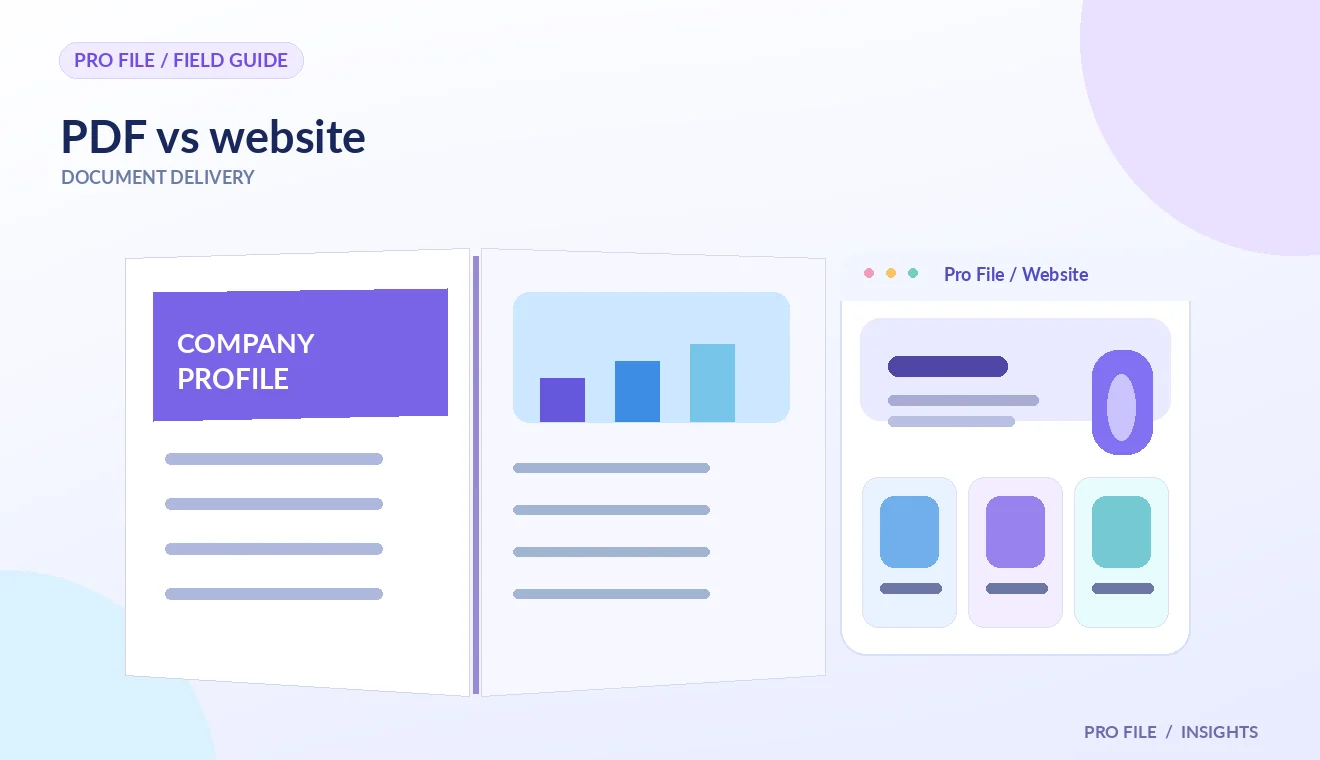
A company profile is a curated file you can send directly through email, messaging, or meetings. It gives you a controlled narrative in a compact format.
A website is a live digital presence that visitors can discover and browse on their own. It can grow, update, and support your online visibility over time.
They solve related but different communication problems.
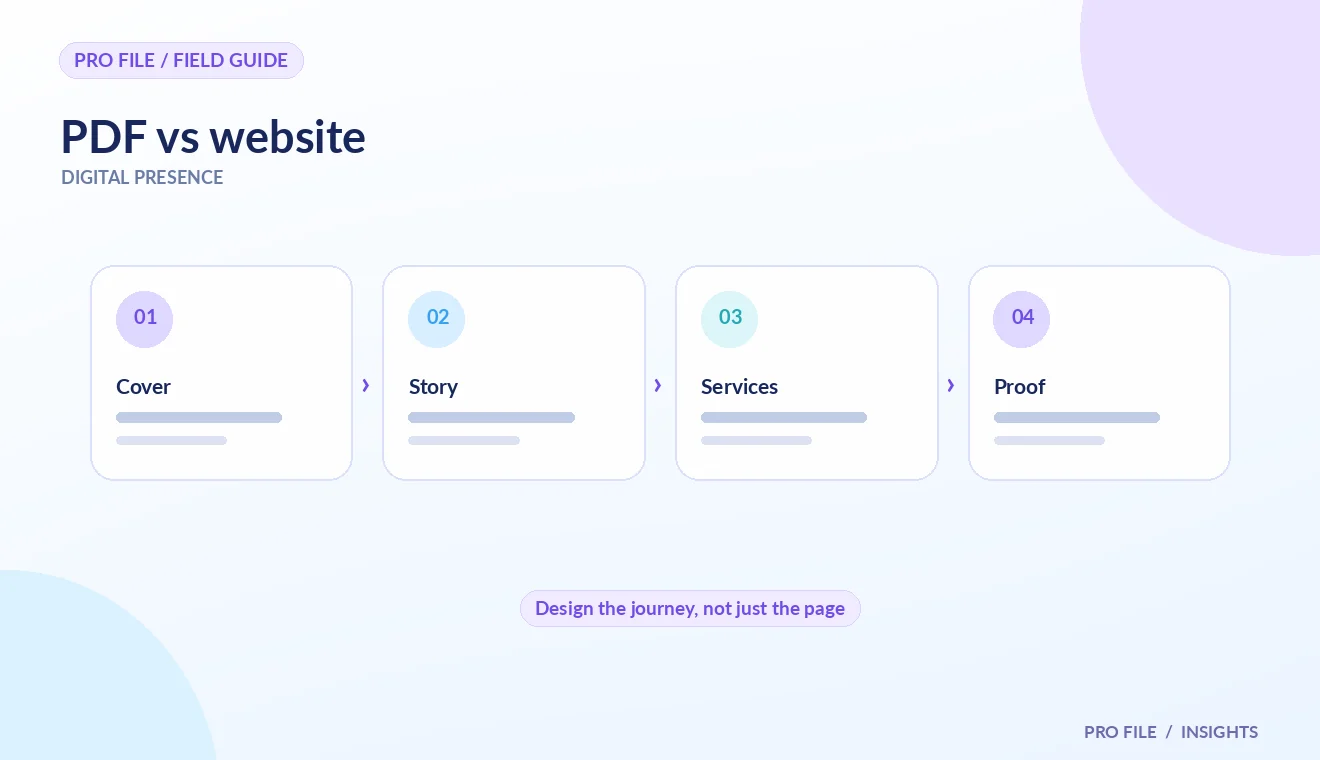
The difference is not simply visual; it is about how people receive and use the information. A PDF is often sent to a known contact and saved or forwarded. A website can be discovered through links or search and can lead visitors through several services and projects. Start with the customer journey.
- Profile = direct sharing
- Website = ongoing digital presence
- Profile = compact narrative
- Website = expandable information
When a company profile should come first
If your business often needs to send a structured introduction, a profile may be the immediate priority.
It is useful in proposals, presentations, tenders, partnerships, and one-to-one business conversations.
It works especially well when your first step with prospects happens through direct contact rather than open online discovery.
A company profile is particularly useful when a concise formal document needs to travel with a quote, proposal, or meeting follow-up. It can answer frequently asked questions in a small number of pages. Remember, however, that downloaded copies do not update themselves when your business details change.
- Proposals and meetings
- Formal introductions
- Direct sharing through email or messaging
- Compact business presentations
When a website should come first
If people search for your company online or if your information changes regularly, a website usually deserves priority.
A website is easier to update, better for long-term visibility, and more suitable for content expansion.
It also becomes the home base for articles, detailed service pages, and digital marketing.
A website becomes more valuable when people need to find your company without receiving a document first. Separate service pages, project stories, FAQs, and direct contact routes can be updated continuously. Yet simply launching a website does not guarantee discovery; content quality, technical setup, and ongoing maintenance matter.
- Search visibility
- Easy updates
- Broader online presence
- Support for content and marketing
Compare strengths and limitations
A profile is easy to share and easy to review offline, but it is less flexible to update.
A website is flexible and scalable, but it requires ongoing attention to content, structure, and maintenance.
The better option depends on how your audience interacts with your business today.
Compare real scenarios rather than asking which format is universally better. A PDF is easy to circulate in procurement conversations and can be read offline once downloaded. A website offers navigation, updates, and searchable pages but requires hosting and usability maintenance. Both have different ongoing costs.
- Ease of sharing
- Ease of updating
- Depth of content
- Access method for the audience
The best results often come from combining both
A profile can act as the concise version while the website acts as the expandable version.
For example, the profile can introduce the business and then direct readers to the website for more details, projects, or contact actions.
This works best when the branding and message remain aligned between both touchpoints.
For a consistent brand, use the same visual identity, tone, service names, and contact facts in both channels. Add a site link or QR code to the profile, and provide a current downloadable PDF on the site. Maintaining a shared content checklist prevents information from drifting between versions.
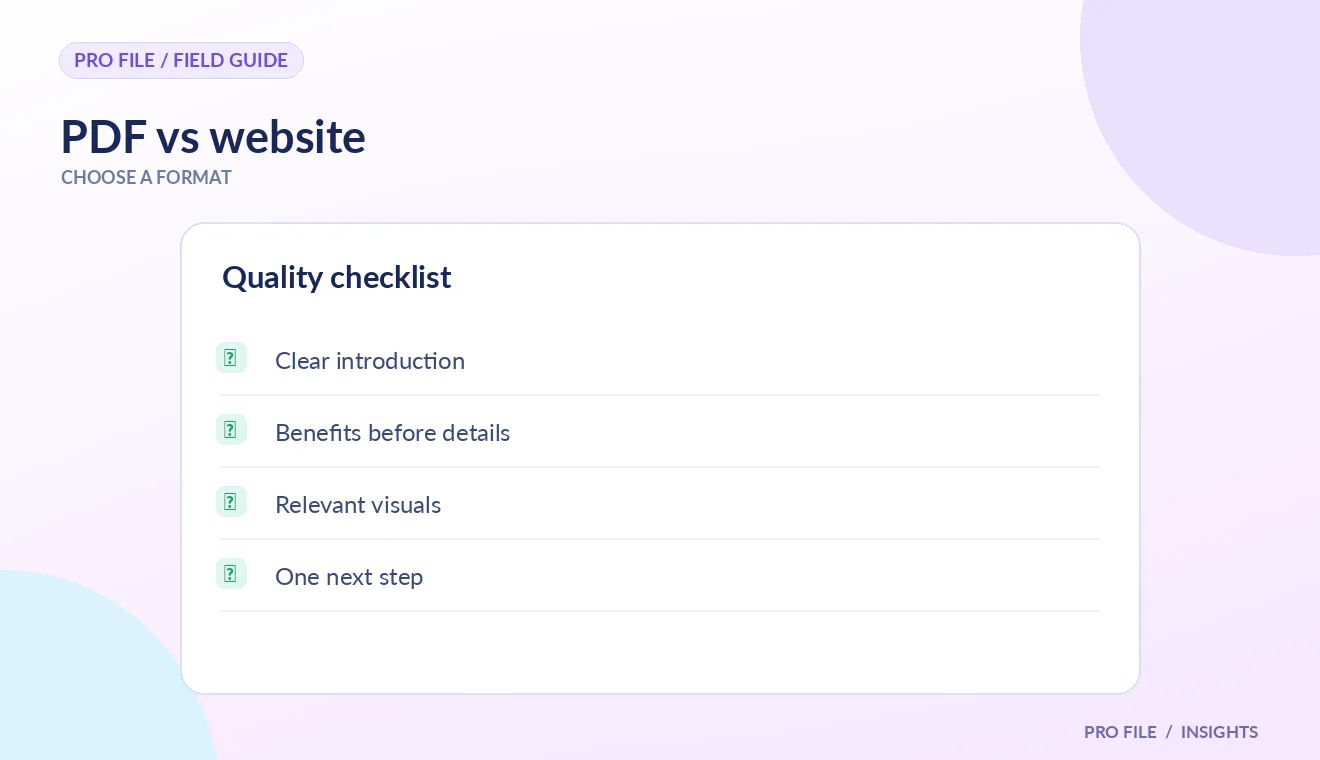
- Consistent identity
- Clear division of content
- Strong links between formats
- One message in two useful forms
How to decide
If budget or time forces you to choose one first, follow the customer journey. Start with the tool that best matches how people currently reach you.
Whenever possible, prepare content in a reusable way so it can support both the profile and the website later.
The smartest choice is the one that supports real communication—not the one that simply looks more impressive.
With a limited budget, prioritize the closest business opportunity. A company preparing for sales meetings may need the PDF first, while one relying on online discovery may prioritize a website. After launch, observe what readers ask for, what pages they visit, and where communication breaks down.
- How prospects find you
- How often content changes
- Whether direct sharing or visibility matters more
- How ready your current content is
A clear objective leads to a much clearer investment decision.
Frequently asked questions
Can a company profile be enough on its own?
It may be enough temporarily in direct-contact scenarios, but many businesses benefit from adding a website for stronger long-term presence.
Can a website fully replace a profile?
Not always. Many business situations still benefit from a compact PDF that is easy to send and review.
What if I have a limited budget?
Start with the format that best matches how clients currently reach you, and prepare content that can support the second format later.
Want to put this into practice?
Tell us what you are building and we will help you choose the right presentation format.
Discuss your project
